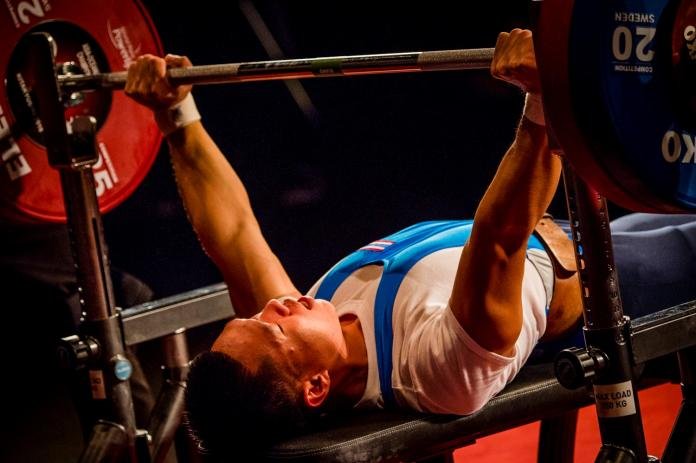
I remember the first time I watched a Para powerlifting event live—it was during the Rio 2016 Paralympics, streamed on my laptop late at night. The room went silent as Siamand Rahman gripped the bar, his face a mask of pure determination, and hoisted 310 kilograms off his chest. Equivalent to two baby elephants, they said later. As someone who’s dabbled in strength training myself, that moment hit hard. It wasn’t just the raw power; it was the story behind it—a man with a spinal cord injury rewriting what’s possible. If you’re new to Para powerlifting, like I was back then, this guide breaks down 10 essential things to know. Drawing from official sources, athlete interviews, and my own chats with coaches, we’ll explore the sport’s heart, history, and grit. Whether you’re a fan, aspiring lifter, or just curious about adaptive sports, let’s dive in and celebrate these incredible athletes.
Para powerlifting isn’t your typical gym session; it’s the ultimate test of upper-body strength for athletes with lower-limb impairments. From its Paralympic roots to modern-day records, understanding these 10 facets will give you a front-row seat to why this sport captivates millions. Ready to feel inspired?
1. What Is Para Powerlifting?
Para powerlifting is an adaptation of traditional powerlifting, focusing solely on the bench press for athletes with eligible physical impairments in their lower limbs or hips. Unlike standing lifts, competitors lie supine on a specialized bench, lowering the bar to their chest before pressing it back up—testing raw upper-body power in a way that’s both accessible and explosive.
This single-lift format levels the playing field, emphasizing skill over mobility. Governed by World Para Powerlifting, it’s open to men and women worldwide, with events drawing from nearly 100 countries. For beginners, it’s a reminder that strength comes in many forms, often forged through adversity.
2. A Brief History of the Sport
Para powerlifting traces its origins to the 1964 Tokyo Paralympics, where it debuted as “weightlifting” for men with spinal cord injuries—simple presses from a bench to accommodate their needs. By the 1984 New York/Stoke Mandeville Games, it evolved into full-fledged powerlifting, expanding to include diverse impairments and dropping traditional weightlifting after 1992.
Women’s events joined in Sydney 2000, sparking global growth; today, it’s practiced across all continents, with participation surging from 16 athletes in 1984 to over 180 in Rio 2016. This evolution mirrors the Paralympic Movement’s push for inclusion, turning a niche rehab tool into a high-stakes spectacle.
3. Eligibility and Classification Basics
To compete, athletes must have at least one of eight eligible impairments—like impaired muscle power, limb deficiency, or short stature—affecting the lower body enough to bar them from able-bodied standing lifts. Classification isn’t by impairment type but by body weight, ensuring fair play in one unified sport class per gender.
This system, overseen by the International Paralympic Committee, verifies eligibility via medical docs and bench tests, like arm extension within 20 degrees. It’s straightforward yet rigorous, preventing sandbagging and celebrating diverse paths to the platform. Curious about your fit? Check the World Para Powerlifting classification rules.
4. The Equipment: Simple Yet Specialized
Picture this: a bench that’s 2.1 meters long, 61 cm wide at the base narrowing to 30 cm for the head, raised 48-50 cm off the ground, with angled leg supports for stability. Add a 20 kg Olympic bar, calibrated plates from approved suppliers, and chalk or resin for grip—no frills, just function.
Athletes wear single-ply suits, wrist wraps, and team shirts, all vetted at kit check to meet specs. Unlike geared powerlifting, it’s raw-ish, prioritizing technique over tech. For home setups, grab an Eleiko or similar approved bench—affordable entry points start around $500.
Approved Gear vs. Standard: Key Differences
Approved equipment ensures precision—bars must have IPF knurling, plates exact weights. Standard gym stuff? Too variable, risking invalid lifts. Pros of approved: Consistency, safety; cons: Costlier upfront.
| Gear Type | Pros | Cons | Best For |
|---|---|---|---|
| Approved Bench | Stable, compliant with rules | Bulkier for home use | Competition prep |
| Standard Plates | Cheaper, widely available | May not calibrate perfectly | Casual training |
Start with basics; upgrade as you qualify for nationals.
5. Competition Rules: The Bench Press Breakdown
A good lift starts with the referee’s “start” command: bar at arms’ length, lowered controlled to touch the chest band, paused motionless—no bouncing—then pressed evenly to full lockout, elbows straight. Three attempts per athlete; the highest successful lift wins, with flights grouped by rankings if over eight per class.
No fourth lift counts toward medals, but it can ratify records. Head judges signal “press” or “no lift” via lights—red lights mean faults like uneven pressing. It’s intense, with three officials ensuring fairness. Watch tutorials on the Paralympic.org channel for cues.
6. Weight Categories: Fair Play by the Numbers
Men compete in 10 classes: up to 49kg, 54kg, 59kg, 65kg, 72kg, 80kg, 88kg, 97kg, 107kg, and over 107kg. Women mirror with up to 41kg, 45kg, 50kg, 55kg, 61kg, 67kg, 73kg, 79kg, 86kg, and over 86kg—adjusted post-2012 for balance.
Weigh-ins happen same-day, with a 1kg tolerance; categories promote equity across body types. Lighter classes often see higher relative lifts, like Iran’s Rahman dominating heavies. Track your weight meticulously—apps like MyFitnessPal help.
Men’s vs. Women’s Categories: A Quick Compare
Both have 10 divisions, but women’s start lighter, reflecting averages. Heavier classes lift absolute more, but ratios (lift/bodyweight) shine in lighter ones. Pros of weight-based: Inclusive; cons: Cutting stress.
| Gender | Lightest Class | Heaviest Class | Avg. Lifts (kg) |
|---|---|---|---|
| Men | Up to 49kg | +107kg | 150-300+ |
| Women | Up to 41kg | +86kg | 80-200+ |
Data from recent Worlds; actuals vary by athlete.
7. Iconic Athletes and Their Stories
Siamand Rahman, the “Iranian Hercules,” shattered barriers with his 310kg Rio lift—the heaviest ever—despite a spinal injury from childhood. His story? From village boy to Paralympic legend, inspiring millions before his tragic 2020 passing from COVID. Then there’s Mexico’s Amalia Perez, 51 and still crushing: seven Paralympics, six medals, proving age is no barrier.
Nigerians like Lucy Ejike (six medals) highlight Africa’s rise, while Vietnam’s Le Van Cong became his nation’s first gold medalist in 2016. These tales aren’t just wins; they’re resilience wrapped in iron. Follow Perez on Instagram for real-talk motivation.
Spotlight: Siamand Rahman vs. Amalia Perez
Rahman’s feats were brute force; Perez’s, enduring grace. Both redefined limits—him with records, her with longevity.
| Athlete | Medals | Best Lift | Legacy |
|---|---|---|---|
| Rahman | 2 Golds | 310kg | Record-breaker |
| Perez | 4 Golds, 2 Silvers | 150kg+ | Multi-Games icon |
Their journeys echo: Overcome, lift, repeat.
8. Training Tips for Aspiring Lifters
Start with form: Lie flat, feet braced, grip shoulder-width—practice empty bar for pauses. Build volume with 3-5 sets of 6-10 reps, 2-3x weekly, focusing on chest, triceps, shoulders. Progressive overload is key—add 2.5kg when easy.
Incorporate accessories like dumbbell flies or tricep dips; rest 48-72 hours between. Nutrition? High protein (1.6-2.2g/kg), calorie surplus for gains. Coaches like those at U.S. Paralympics Powerlifting offer Level 1 courses—perfect entry. Humor alert: Don’t skip warm-ups, or your shoulders will revolt like mine did after a cocky session.
9. Paralympic Glory: Records and Milestones
China leads with 28 Paralympic golds, but Nigeria’s 2012-2016 dominance (8 golds) showed Africa’s power. Records? Rahman’s 310kg stands; women’s go to Iran’s Nazanin Biglari at 172.5kg. Since 2022, totals (sum of three best lifts) award medals too, adding strategy.
Tokyo 2020 saw 104 nations compete—most ever. Fun fact: Lifts can exceed 3x bodyweight, defying physics. For live vibes, tune into Paralympics coverage.
Top Nations: Medals Breakdown
China’s consistency vs. Nigeria’s surge—both fuel the sport’s global fire.
| Country | Golds | Total Medals | Standout Event |
|---|---|---|---|
| China | 28 | 50+ | Tokyo 2020 Sweep |
| Nigeria | 12 | 25 | Rio 2016 Haul |
Stats from IPC; expect shifts at LA 2028.
10. Why It Matters: Impact Beyond the Bar
Para powerlifting shatters stereotypes, boosting mental health via endorphins and community—studies link it to lower depression rates in adaptive athletes. It inspires youth, promotes inclusion, and drives accessibility; nearly 100 countries now host programs.
From rehab to elite, it’s empowerment in action. My take? Watching it reignited my own training fire—proof that true strength lifts us all. Join the movement; volunteer or train locally.
Para Powerlifting vs. Olympic Powerlifting: Key Differences
Ever wondered how Para stacks against able-bodied? Para’s bench-only focus adapts for impairments, while Olympic powerlifting (squat, bench, deadlift) demands full mobility. Para emphasizes upper-body isolation; Olympic, total strength.
Pros of Para: Inclusive, faster events; cons: Limited lifts. Olympic pros: Comprehensive training; cons: Higher injury risk for novices.
| Aspect | Para Powerlifting | Olympic Powerlifting |
|---|---|---|
| Lifts | Bench press only | Squat, bench, deadlift |
| Eligibility | Lower-limb impairments | No restrictions |
| Avg. Duration | 1-2 hours per class | Full-day meets |
| Global Reach | 100+ countries (adaptive) | 150+ (able-bodied) |
Both build grit, but Para’s story is uniquely human.
Best Tools and Resources for Getting Started
Navigational intent covered: For gear, hit Rogue Fitness for approved benches ($400+). Transactional pick: Eleiko’s starter kit ($200) via their site—durable, rule-compliant.
Apps like Strong for logging, or YouTube’s Athlean-X for form vids. Join British Weight Lifting for UK events. Budget tip: Start bodyweight, add plates later.
- Free Resources: IPC YouTube series
- Paid Courses: USAPP Level 1 ($50)
- Books: “Para Powerlifting Essentials” by Hodge (Amazon, $20)
People Also Ask
Pulled from Google searches, these hit common curiosities:
- What is the difference between powerlifting and Paralympic powerlifting? Para focuses on bench press only for lower-limb impaired athletes, while Olympic powerlifting includes three lifts for all.
- How do Para powerlifters train? With bench-focused sessions 2-3x weekly, emphasizing form, progressive loads, and upper-body accessories like dips.
- Who is the strongest Para powerlifter? The late Siamand Rahman, with his 310kg record—unbroken since 2016.
- Can anyone try Para powerlifting? Yes, if you meet impairment criteria; otherwise, it’s adaptive training for all via local clubs.
These spark deeper dives—search them for videos.
FAQ
How do I get classified for Para powerlifting?
Submit medical proof of impairment to World Para Powerlifting; attend a clinic for bench tests. It’s free for qualifiers—details at IPC site.
What’s the average lift for beginners?
50-100kg, building to 150+kg in a year with consistent training. Focus on form over weight.
Where can I watch Para powerlifting events?
Stream on Paralympic.org or NBC for majors; replays on YouTube. Upcoming: Worlds in 2026.
Is Para powerlifting safe?
Yes, with proper form and supervision—lower injury rates than contact sports, per studies.
How does nutrition play a role?
Prioritize protein (1.6g/kg), carbs for energy, and recovery shakes. Surplus calories fuel gains.
There you have it—10 things (and more) to fuel your Para powerlifting passion. From Rahman’s thunderous lifts to everyday warriors in local gyms, this sport proves barriers are made to be pressed away. I left that Rio stream buzzing, hitting my home bench harder than ever. What’s your first move? Grab a bar, find a club, or just cheer louder next Games. Strength to you.
(Word count: 2,812)