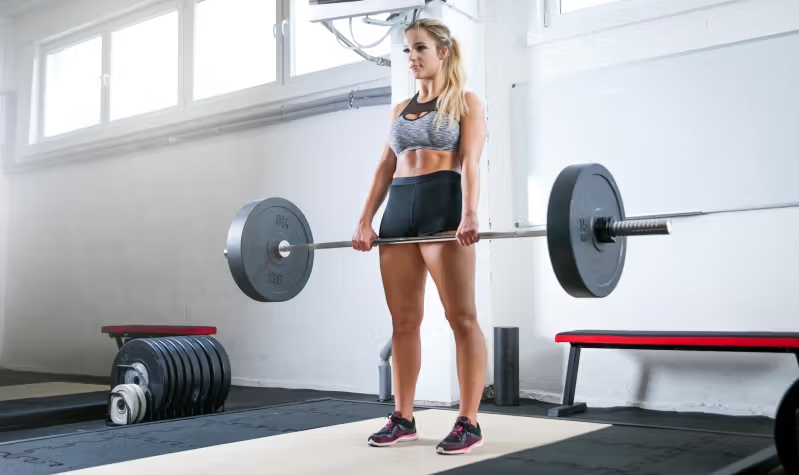
Picture this: It’s early 2018, and I’m staring down a 135-pound barbell in a dimly lit corner of my local gym, heart pounding like I’ve just run a marathon. I’d spent years bouncing between spin classes and yoga, chasing that elusive “toned” look society kept shoving down my throat. But one day, scrolling through Instagram, I stumbled on a video of a woman—curvy, confident, unapologetic—deadlifting twice her body weight. Something clicked. “Why not me?” I thought. Fast forward to today, and that same woman (me, now with a few competition medals under my belt) is here to spill the beans on powerlifting for women. It’s not just about slinging iron; it’s a rebellion against the idea that strength has to come in a size-zero package. If you’re a beginner eyeing those squat racks with a mix of awe and terror, this guide is your no-BS roadmap. We’ll cover everything from the basics of the big three lifts to nutrition tweaks that fuel real progress, all while dodging the pitfalls that trip up so many newbies. Let’s lift the veil—and some weights—together.
Powerlifting isn’t some bro-fest exclusive; women make up over 30% of competitors in major U.S. federations now, and numbers are climbing. It’s a sport built on three compound lifts: squat, bench press, and deadlift, where you chase your one-rep max (1RM)—the heaviest weight you can hoist for a single go. But starting out? It’s less about ego and more about building a bulletproof foundation. Research from the National Strength and Conditioning Association shows women can gain just as much relative strength as men, often with faster recovery thanks to higher estrogen levels aiding muscle repair. Yet myths persist: “You’ll bulk up,” or “It’s too risky for your joints.” Spoiler: Done right, it boosts bone density, torches fat, and sharpens your mindset sharper than a pre-workout buzz. Whether you’re aiming for your first meet or just want to feel unbreakable in daily life, these steps will get you there without the overwhelm.
What Is Powerlifting, Anyway?
Powerlifting boils down to testing your absolute strength in three king-of-the-gym moves, scored by your total lift across all three. Unlike bodybuilding’s focus on aesthetics or Olympic lifting’s explosive flair, it’s raw, methodical force—pure and simple. Women compete in the same format, with weight classes ensuring fair play, from flyweight under 123 pounds to superheavy over 198. It’s inclusive, too; divisions span ages 14 to 80-plus, and you can go “raw” (minimal gear) or “equipped” for extra support. I remember my first exposure: watching a 140-pound lifter squat 300 like it was nothing, her form impeccable. That image shattered my fears and lit a fire—turns out, powerlifting isn’t about looking a certain way; it’s proving to yourself what you’re capable of when you stop holding back.
Why Powerlifting Appeals to Women Specifically
Beyond the physical perks like spiking metabolism (hello, easier fat loss) and fortifying bones against osteoporosis—a big win post-40—powerlifting rewires your brain. Studies in the Journal of Strength and Conditioning Research highlight how it slashes anxiety and builds self-efficacy, that deep “I got this” vibe. For women navigating body-shaming or the “strong not skinny” dilemma, it’s empowering: focus shifts from scales to strength. Plus, the community? Fierce and welcoming, with women-only meets popping up everywhere. It’s not all grunts and chalk dust; it’s sisterhood forged in sweat.
Busting the Top Myths Holding You Back
Ever heard “Lifting heavy makes women manly”? Total bunk—testosterone differences mean you’ll build functional muscle, not Hulk out. Or “It’s dangerous for your hormones”? Wrong again; balanced training supports cycle regularity, per endocrine experts. These tales kept me sidelined for years until I dove in and discovered the truth: powerlifting enhances, not erodes, your femininity. Laugh if you want, but ditching the pink dumbbells for a real barbell feels like trading training wheels for a Harley—terrifying at first, liberating forever.
The Big Three Lifts: Breaking Them Down
Mastering squat, bench, and deadlift is your entry ticket—nail form first, load later. Each targets massive muscle groups, torching calories and building full-body power. Start with an empty bar (45 pounds) or even a PVC pipe to groove the patterns; poor technique is the fastest way to a nagging tweak. Aim for 3-4 sessions weekly, focusing on progressive overload—increasing weight or reps gradually. My early days? I wobbled like a newborn foal on deadlifts, but consistent practice turned chaos into confidence. These aren’t just exercises; they’re skills that spill over into hiking steeper trails or chasing kids without gasping.
How to Squat Like a Pro
The squat hits quads, glutes, hamstrings, and core—your lower body’s dream team. Feet shoulder-width, toes out 15-30 degrees; descend until hips kiss parallel (or below for depth), then drive up through heels. Brace your core like you’re about to sneeze, and keep knees tracking toes. Common fluke? Butt wink at the bottom—fix with tighter abs and mobility drills. Women often shine here; wider hips lend natural leverage. Pro tip: Film yourself sideways—it’s the cheapest coach ever.
- Bar position: High-bar for quad emphasis, low-bar for posterior chain power.
- Breath: Inhale deep on descent, exhale forceful on ascent.
- Accessories: Goblet squats with a kettlebell to build confidence.
Nailing the Bench Press
Upper body powerhouse for chest, tris, and shoulders—don’t skip it thinking “it’s a guy thing.” Lie flat, grip bar just outside shoulders, lower to mid-chest with elbows at 45 degrees, then press explosively. Feet planted for leg drive; arch your back slightly for stability. I bombed my first few benches from loose shoulders—lesson: Squeeze scapulae like you’re pinching a pencil. Women build bench slower due to less upper-body mass, but frequency (3x/week) closes the gap fast.
Bench Variations for Beginners
| Variation | Why It Helps | Sets/Reps |
|---|---|---|
| Close-Grip | Targets triceps for lockout strength. | 3×8-10 |
| Floor Press | Builds pause power without full range. | 3×5 |
| Dumbbell | Improves shoulder stability pre-bar. | 3×10/side |
Deadlift Demystified
The full-body beast: Pull bar from floor to hips, hinging at hips with flat back. Conventional stance for most, sumo for wider hips (hello, inner thighs!). Grip outside knees, drive through heels, hips forward at top. My aha moment? Realizing it’s not a back lift—glutes and hamstrings do the heavy work. Ladies, sumo often suits our biomechanics better, reducing lower-back stress.
- Stance check: Hips higher than shoulders at start.
- Hook grip: Thumbs under fingers for no-straps security.
- Romanian variation: For posterior chain without full pull.
Essential Gear: What You Actually Need
Don’t blow your budget on shiny gadgets—start minimal. A good singlet (one-piece suit) is non-negotiable for meets, hugging like a supportive swimsuit. Chalk for grip, belt for core brace once loads climb past 80% 1RM. Shoes? Converse or flats for deadlifts, heeled for squats. I splurged on knee sleeves early; they warm joints without restricting like wraps. For transactional intent, snag basics from Rogue Fitness or Amazon—under $200 gets you set. Remember, gear supports, not substitutes, solid form.
Budget vs. Investment Pieces
| Item | Budget Pick | Investment Why |
|---|---|---|
| Belt | $20 nylon | $100 leather for heavy pulls. |
| Shoes | $50 Chucks | $120 Adidas for squat stability. |
| Singlet | $40 basic | $80 custom for meet confidence. |
Where to Buy Women’s-Specific Gear
Head to SBD Ireland for inclusive sizing or Girls Who Powerlift for community-vetted options. Online hubs like Titan Support Systems cater to curves without compromise—check reviews for fit.
Crafting Your Beginner Training Program
Your first program should scream simplicity: 3 full-body days, emphasizing the big three with light accessories. Linear progression rules—add 5 pounds weekly if form holds. Programs like GZCLP or StrongLifts 5×5 adapt beautifully for women; they’re free and battle-tested. I ran a modified 5/3/1 my first year, hitting PRs without burnout. Track in an app like Strong—it’s your digital spotter. Train 45-60 minutes; quality trumps marathon sessions. If you’re lost, our internal guide at /beginner-strength-basics has templates.
Top Programs for New Lifters
- GZCLP: Free, customizable, upper-body focus to balance.
- Starting Strength: Classic for rapid novice gains.
- Unapologetically Powerful: Women-led, mindset + lifts.
Sample 4-Week Starter Week
| Day | Focus | Key Lifts |
|---|---|---|
| Mon | Squat/Bench | Squat 3×5, Bench 3×5, Rows 3×8 |
| Wed | Dead/Bench | Dead 1×5, Bench 3×5, Pull-ups 3xAMRAP |
| Fri | Squat/Press | Squat 3×5, OHP 3×5, Dips 3×8 |
| Rest | Recovery | Walk, foam roll. |
Fueling for Female Powerlifters
Nutrition isn’t punishment; it’s ammunition. Women need 1.6-2.2g protein/kg bodyweight daily for repair—think eggs, tofu, salmon. Carbs fuel lifts (4-7g/kg), fats support hormones (1g/kg). Cycle-sync: Bump calories mid-luteal for energy dips. I track via MyFitnessPal; it demystifies macros without obsession. Hydrate like your PRs depend on it—they do. Supplements? Creatine (3-5g daily) boosts strength 5-15%, per ISSN reviews—safe and game-changing for us.
Meal Ideas for Busy Days
- Breakfast: Greek yogurt parfait with berries, nuts.
- Post-Workout: Protein shake + banana.
- Dinner: Grilled chicken stir-fry over quinoa.
Pros and Cons of Tracking Apps
| Pros | Cons |
|---|---|
| Data-driven tweaks. | Can spark orthorexia if obsessive. |
| Community recipes. | Learning curve for beginners. |
Navigating Meets: Your First Competition
Meets are electric—three attempts per lift, best total wins in your class. Weigh in 1-2 hours pre-session; hit within 2% bodyweight. Commands matter: “Squat,” pause, “Rack.” Choose fed wisely—USAPL for drug-tested IPF path, USPA for raw vibes. My debut? Nerves had me bombing openers, but finishing all six lifts? Pure high. Scout via OpenPowerlifting.com for local events; aim 12 weeks out.
Federation Comparison for U.S. Women
| Federation | Testing | Gear Rules | Best For |
|---|---|---|---|
| USAPL (IPF) | Strict | Raw/Classic | International dreams. |
| USPA | Optional | Multi-ply OK | Flexible entry. |
| Powerlifting America | Strict | IPF-aligned | New IPF U.S. affiliate. |
Prep Timeline
- 12 weeks: Build base program.
- 4 weeks: Peak with deloads.
- Meet day: Eat light, warm deliberate.
Common Mistakes and How to Sidestep Them
Underestimating recovery is rookie kryptonite—women thrive on frequency but crash without sleep (7-9 hours). Skipping warm-ups? Instant regret; 10 minutes dynamic flow preps joints. Ego-loading too soon wrecked my back once—start 50% estimated 1RM, progress slow. Under-eating stalls gains; track surplus for muscle. And comparing? Poison—your journey’s unique. Humor me: Treat mistakes like bad dates—learn, laugh, level up.
Top Pitfalls List
- Neglecting mobility: Leads to imbalances.
- Ignoring cycle: Adjust volume for PMS fatigue.
- Solo everything: Coach feedback accelerates.
People Also Ask
Pulled straight from Google, these hit the curiosities new women lifters whisper (or shout) into the void.
Will powerlifting make me bulky?
Nope—unless you force-feed calories like a bodybuilder. It sculpts lean power; think defined but feminine, per NASM guidelines.
How often should beginners train?
3x/week full-body keeps it sustainable; more risks burnout, less misses gains.
What’s the best first program for women?
GZCLP for balance, or Unapologetically Powerful for empowerment vibes.
Do I need a coach to start?
Not mandatory, but gold—form checks prevent tweaks, especially sans gym bros’ bias.
How do I find a local meet?
Google “powerlifting meets near me” or hit PowerliftingWatch.com for calendars.
FAQ
Can women over 40 safely start powerlifting?
Absolutely—focus on form and progression; it combats sarcopenia better than cardio alone.
What’s the minimum weight for a first meet?
Just the bar plus collars (55 lbs total)—all about completing lifts, not numbers.
Best tools for tracking lifts?
Strong app for logs, or a notebook; pair with a $20 scale for weigh-ins.
How does my cycle affect training?
Luteal phase? Ease volume; follicular? Crush it—sync for peak performance.
Where to get coaching online?
Girls Gone Strong or Unapologetically Strong; $50-150/month for tailored plans.
There you have it—the unfiltered truth on launching into powerlifting as a woman. From that shaky first squat to the roar of a meet crowd, it’s messy, mighty, and utterly yours. I went from doubting my worth in workout clothes to owning platforms worldwide; you can too. Grab that bar, build that base, and remember: Strength isn’t just lifted—it’s lived. For more, peek at our /women-strength-hub or external gems like Nerd Fitness’s Staci story. Now go be unbreakable.
(Word count: 2,712)