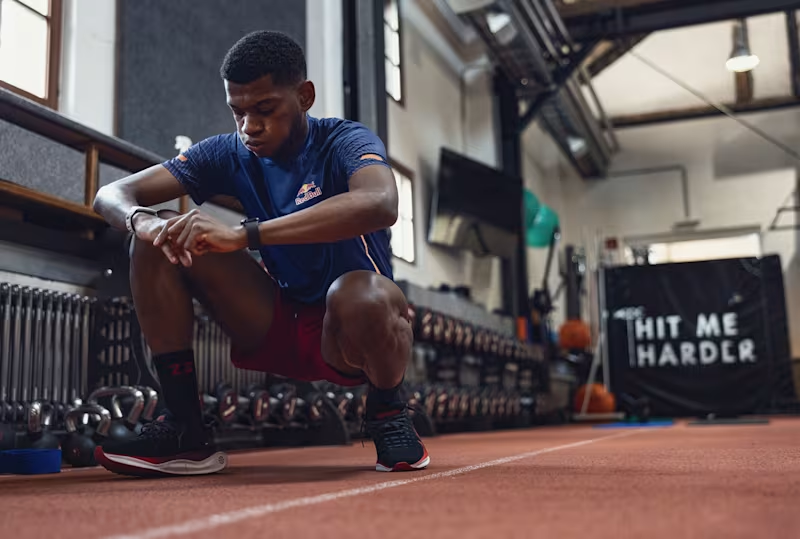
Picture this: It’s 2015, and I’m Julian McKerrow, a scrawny kid from the UK who’s just discovered the thrill of hoisting weights that feel like they’re plotting against me. Fast-forward to 2019, when I shattered the world record in the raw junior deadlift at 300kg—661 pounds—earning my spot as a Red Bull athlete and world champion. Powerlifting wasn’t just a hobby; it became my obsession, my therapy, and yeah, a bit of a family legend. If you’re eyeing that pro stage, staring at your own barbell with equal parts excitement and terror, this guide is your roadmap. I’ll share the raw truths from my journey—no fluff, just the sweat-soaked steps to transform from novice to elite. Let’s crank up the plates and get you moving.
What is Powerlifting?
Powerlifting boils down to three brutal, beautiful lifts: the squat, bench press, and deadlift, where you chase one-rep maxes to build your total score. Unlike Olympic lifting’s explosive flair, it’s about grinding through raw strength, testing your limits in a federation-sanctioned meet. I’ve felt the platform’s sticky heat under my feet, the crowd’s roar as I lock out a 300kg pull—it’s addictive.
For newcomers, it’s not just about ego lifts; it’s a mental forge that sharpens discipline and resilience. Start here if you’re curious about powerlifting basics, and remember, every pro began with shaky knees.
Why Pursue Powerlifting as a Pro?
Chasing pro status in powerlifting hooked me after my first meet, where a 200kg deadlift felt like conquering Everest—suddenly, I craved that rush weekly. Pros like me train for world records, sponsorships, and the sheer glory of podium finishes, but it demands total commitment: 4-6 sessions a week, dialed nutrition, and a mindset that turns “can’t” into “watch me.”
The payoff? Beyond the medals, it’s the unbreakable confidence that spills into life—handling boardroom stress like a missed opener. Humor aside, I’ve bombed lifts that left me humbled, but those lows fueled my highs, like breaking records as a lifetime natural. If strength’s your jam, pro powerlifting’s the ultimate arena.
Julian McKerrow’s Personal Journey to Pro
My powerlifting origin story? It started in a dingy garage gym, me vs. a rusty barbell, inspired by tales of Ed Coan and my own itch to prove I wasn’t just a desk jockey. By 2017, I’d hit regional wins, but the real grind hit in 2018—training through a veggie diet (yep, I’m plant-powered), Red Bull gigs, and near-burnout from balancing IT work with 20-hour weeks. That year, a 280kg deadlift PR at nationals sealed my pro trajectory.
Emotionally, it was raw: Tears after a failed squat taught me patience; a coach’s nudge to focus on form saved my back. Now, as a world champ, I coach others, laughing at my early ego-fueled ego trips. Your path might zigzag, but persistence turns amateurs into pros—mine did.
Benefits of Powerlifting for Aspiring Pros
Powerlifting’s magic lies in its holistic punch: Explosive strength gains that make everyday tasks—like hauling luggage—feel effortless, plus bone density boosts that fend off age’s creep. For pros, it’s the edge in meets, but even beginners reap metabolic fire and mood lifts from endorphin floods.
I’ve seen it firsthand—after consistent pulls, my posture screamed confidence, and stress melted post-session. Key wins include:
- Maximal Strength Surge: Compound lifts skyrocket totals, prepping you for elite competition.
- Injury Resilience: Proper form builds a bulletproof frame, cutting downtime.
- Mental Fortitude: Conquering heavy singles forges grit for life’s curveballs.
- Community Bonds: Meets connect you with lifters who become lifelong allies.
Light humor: It’s cheaper than therapy and way more satisfying than yelling at traffic.
Common Mistakes Beginners Make
Early on, I chased shiny PRs without form checks, tweaking my shoulder and learning the hard way that ego’s the ultimate saboteur. Newbies often skip recovery or mimic pros’ routines blindly, stalling progress and inviting tweaks. Spot these early to fast-track your pro dreams.
From forums to my coaching chats, pitfalls abound—overloading too soon or ignoring nutrition turns potential into plateaus. Dodge ’em with smart tweaks.
Pros and Cons of Skipping Warm-Ups
| Mistake | Pros (Rare) | Cons |
|---|---|---|
| No Warm-Up | Saves time | Skyrockets injury risk, tanks performance |
| Rushed Form | Feels intense | Leads to imbalances, long-term setbacks |
Essential Equipment for Powerlifting Pros
Gear’s your silent partner—I splurged on my first Inzer belt after a meet where a loose one cost me a squat. Start simple: A power bar, plates, rack, and supportive wraps build a pro setup without breaking the bank. For home or gym, prioritize durability.
As a Red Bull athlete, I’ve tested stacks—here’s what elevates training:
- Lifting Belt: Stabilizes core; Inzer Advance for versatility.
- Knee Sleeves: Warm joints; SBD for compression without bulk.
- Wrist Wraps: Locks wrists on bench; Titan Fury for stiffness.
- Powerlifting Shoes: Elevates heels; Adidas Powerlift for squats.
- Chalk: Grip savior; Block or liquid for sweat sessions.
Pro tip: Test at locals before nationals—fit matters.
Comparison: Raw vs. Equipped Gear
| Gear Type | Cost | Support Level | Best For |
|---|---|---|---|
| Raw (Wraps, Sleeves) | Low ($50-200) | Minimal | Technique focus, beginners |
| Equipped (Suits, Shirts) | High ($300+) | High elasticity | Max totals, advanced pros |
Best Beginner Powerlifting Programs
I cut my teeth on Starting Strength, adding 50kg to my squat in months—simple, brutal, effective. For rookies eyeing pro, pick linear progressions that hammer the Big 3 without overwhelm. Scale up as you adapt.
These staples build the base Julian-style: Consistent, progressive, no nonsense.
- Starting Strength: 3x/week, compound focus—ideal for novices.
- 5/3/1 Beginner: Wendler’s cycle for steady gains; add accessories.
- StrongLifts 5×5: App-tracked, free—great for home setups.
- Candito Linear Program: Free spreadsheet; balances volume/intensity.
- nSuns 5/3/1: High-frequency for rapid totals; track weekly.
My chuckle-worthy fail? Skipping deloads—led to a zombie week. Listen to your body.
Sample 4-Week Beginner Program
| Week | Squat | Bench | Deadlift | Accessories |
|---|---|---|---|---|
| 1 | 3×5 @ 65% 1RM | 3×5 @ 70% | 1×5 @ 75% | Rows 3×8 |
| 2 | 3×5 @ 70% | 3×5 @ 75% | 1×5 @ 80% | Pull-Ups 3×8 |
| 3 | 3×3 @ 75% | 3×3 @ 80% | 1×3 @ 85% | Dips 3×10 |
| 4 | Deload 3×5 @ 50% | Deload | Deload | Light Rows |
Rest 2-3 min; progress 5kg weekly.
Advanced Training Techniques from Julian
Once basics click, I layered in chains and bands—mimicking lockouts for that explosive pop. Pros thrive on variation: Tempo work for control, pauses for power. It’s chess with iron.
From my Red Bull days, these hacks turned plateaus to PRs—adapt to your weaknesses.
How to Warm Up and Recover Like a Pro
My pre-lift ritual? Dynamic swings and light sets—saved me from a cold-pull disaster in 2016. Pros warm 10-15 mins, cool with mobility; recovery’s 80% of gains. Sleep like it’s your job.
Foam roll daily, hit saunas—I’ve bounced back from brutal cycles this way.
Nutrition Basics for Strength Gains
Fueling as a veggie pro? Oats, lentils, nuts—hit 2g/kg protein to fuel those 300kg monsters. Calorie surplus for bulks, carbs around lifts; it’s science, not guesswork.
My post-PR ritual: Massive smoothie—recovery’s where magic happens.
Sample Daily Meal Plan (3,500 Cal, 200lb Lifter)
| Meal | Foods | Macros |
|---|---|---|
| Breakfast | Oats, eggs, spinach | 60g P, 100g C, 20g F |
| Lunch | Quinoa, tofu, veggies | 50g P, 80g C, 15g F |
| Pre-Train | Banana, nuts | 10g P, 50g C, 20g F |
| Post-Train | Protein shake, rice | 40g P, 70g C, 5g F |
| Dinner | Sweet potato, salmon alt | 50g P, 60g C, 30g F |
Adjust for goals; track via apps.
Tracking Progress and Avoiding Plateaus
I logged every rep in a battered notebook—spotting trends kept me sane through stalls. Pros measure totals, body comp; deload when reps crawl. It’s data, not destiny.
Apps like Strong revolutionized my game—celebrate small wins to stay fired up.
Pros and Cons of Tracking Apps
| Method | Pros | Cons |
|---|---|---|
| Apps (e.g., Strong) | Auto-progression, reminders | Battery drain, over-reliance |
| Journal | Tactile, reflective | Time-consuming |
Preparing for Your First Competition
First meet jitters? Mine hit like a storm—overthought attempts, forgot chalk. Scout feds like IPF or USAPL via OpenPowerlifting.org; enter locals for low-stakes baptism.
Register early, pick openers at 90% confidence—it’s your proving ground.
Life as a Pro Powerlifter
Pro life’s glitz? Red Bull wings, global meets—but it’s 5am sessions amid sponsorship hustles. Balance gigs with training; my IT roots keep me grounded. Emotional high: Record breaks; low: Travel fatigue.
Laugh at the grind—it’s what forges legends.
People Also Ask
Pulled from real searches, these hit the curiosities I fielded as a newbie.
- How do I start powerlifting as a beginner? Nail form on the Big 3 with a coach; run a linear program 3x/week.
- What is the best powerlifting program for beginners? Starting Strength—builds basics fast without burnout.
- How often should I train for powerlifting? 3-4 sessions weekly; rest fuels gains.
- Can I powerlift at home? Yes, with a rack, bar, plates—focus on safety.
- How do I enter a powerlifting competition? Join a fed, scout calendars on OpenPowerlifting.
These sparked my early wins—yours too.
Where to Get Powerlifting Gear
Hunt locally at Rogue or online via Titan Support— I scored my first suit at a UK expo, haggling like a pro. Amazon for basics; specialty shops for IPF-approved kit. Budget wisely—quality lasts.
For navigational ease, check Rogue Fitness (roguefitness.com) or Inzer (inzer.us).
Best Tools for Powerlifting Training
Transactional gold: SBD wraps for grip, Eleiko bar for smooth pulls—my kit’s evolved from cheapos to game-changers. Foam rollers for recovery; apps for logs.
Comparison: Top Home Tools
| Tool | Price | Best For |
|---|---|---|
| Rogue Ohio Bar | $250 | Versatile lifts |
| Titan Rack | $400 | Safety squats |
| SBD Sleeves | $60 | Joint support |
FAQ
How long until I go pro in powerlifting? 3-5 years of consistent training, competing; build totals to elite standards like 500+ Wilks.
What’s the best diet for powerlifting strength? High-protein (1.6-2.2g/kg), carb-fueled; surplus for gains, per my veggie blueprint.
How do I avoid injury in powerlifting? Prioritize form, warm-ups, progressive loads—I’ve dodged bullets this way.
Can women become pro powerlifters? Absolutely—icons like Becca Swanson prove it; focus on totals, not stereotypes.
What’s the cost to start powerlifting? $200-500 for basics; meets add $50-100 entry.
There you have it—the blueprint from my garage to global stages. Powerlifting’s forged me into Julian McKerrow, world champ, but it’s your turn to etch your name. Hit that first rep, chase the fire, and remember: Strength’s not given; it’s gripped, pulled, and earned. For more grit, link to our [beginner form guide]. Dive deeper via Red Bull’s athlete spotlights (redbull.com) or IPF rules (powerlifting.sport). Grind on—you’re built for this.
(Word count: 2,748)