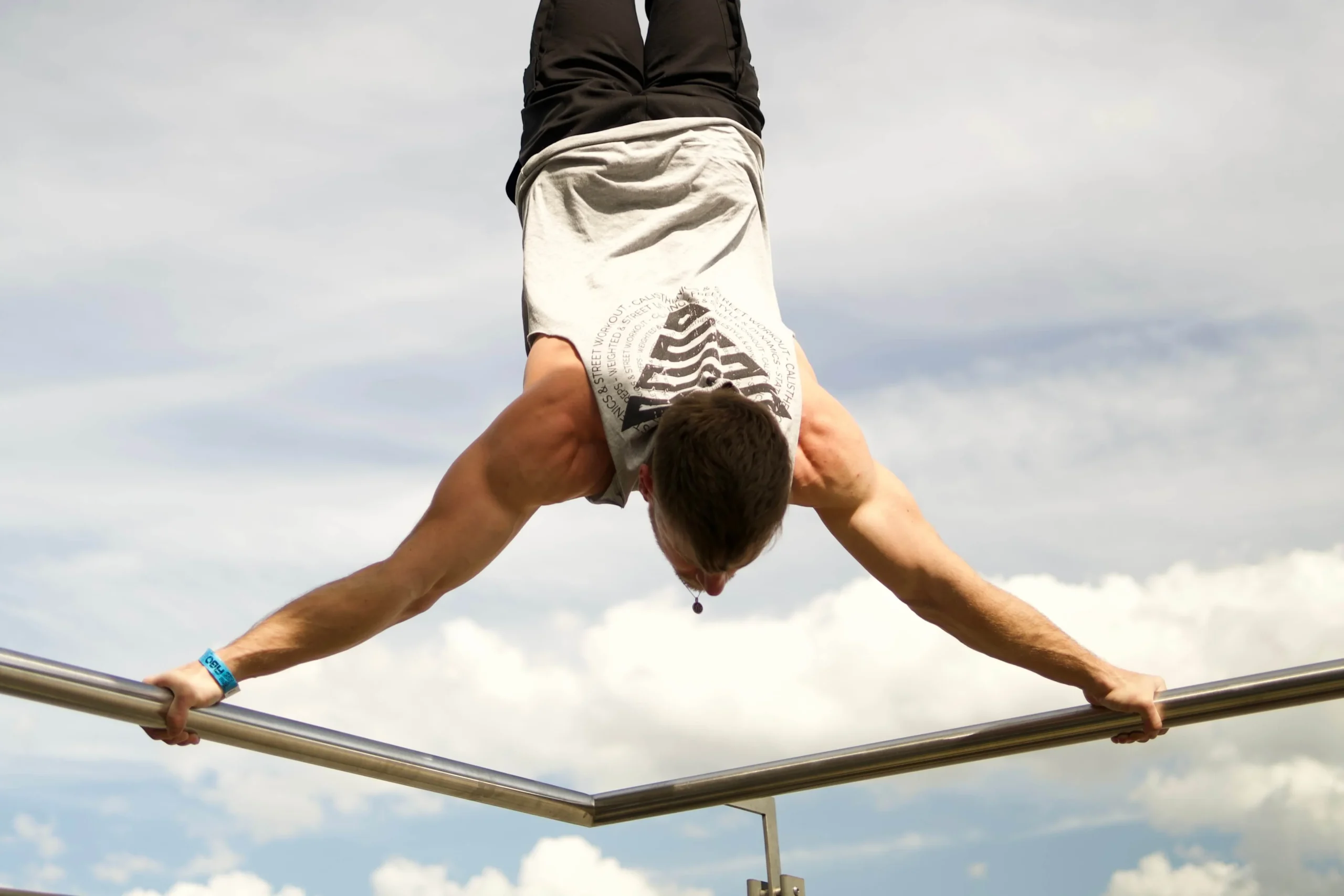
I’ll never forget the summer I decided to ditch the gym and try calisthenics in my backyard. Armed with nothing but a rusty pull-up bar and a questionable amount of confidence, I fumbled through push-ups and squats, feeling like a newborn giraffe but oddly empowered. Fast forward a few months, and I was stronger, leaner, and moving better than ever—no weights, no membership, just my body and a bit of grit. Calisthenics, the art of using your own bodyweight to build strength and physique, is a game-changer for anyone, from total newbies to seasoned athletes. In this article, we’ll unpack seven essential calisthenics exercises every beginner should master to sculpt a functional, head-turning body. These moves are accessible, scalable, and backed by science to deliver results—whether you’re aiming to tone up, boost confidence, or simply feel unstoppable.
What is Calisthenics?
Calisthenics is a training style that leverages bodyweight exercises like push-ups, pull-ups, and planks to build strength, mobility, and endurance without fancy equipment. Rooted in ancient Greek practices (the word comes from “kallos” for beauty and “sthenos” for strength), it emphasizes functional movements that mirror daily life—think climbing, squatting, or pushing. Perfect for beginners, it’s low-cost and adaptable, letting you train anywhere, from a park to your living room.
Why Calisthenics is Perfect for Beginners
When I started, I loved how forgiving calisthenics was—no intimidating gym bros or complex machines, just me versus gravity. It builds a balanced physique while teaching body control, which reduces injury risk for newcomers. Research from the Journal of Sports Sciences shows bodyweight training improves strength by 15-20% in 8 weeks, rivaling weights for beginners, making it an ideal starting point.
- Zero Equipment Needed: Train at home, park, or beach—your body is the gym.
- Scalable Difficulty: Modify moves (e.g., knee push-ups) to match any fitness level.
- Full-Body Focus: Hits multiple muscles, carving a lean, proportional look.
- Joint-Friendly: Low impact preserves knees and shoulders for long-term gains.
- Boosts Confidence: Mastering a pull-up feels like conquering a mountain.
- Improves Mobility: Dynamic moves enhance flexibility for daily ease.
- Mental Clarity: Focused effort doubles as a stress-busting mindfulness fix.
These align with insights from the American Council on Exercise, praising calisthenics for accessibility and effectiveness.
Getting Started with Calisthenics
No need to overcomplicate it—begin with 15-20 minute sessions, three times a week, in a space where you can move freely. Wear comfy clothes and maybe grab a yoga mat for comfort. My first “gym” was a corner of my apartment; consistency, not perfection, got me results.
7 Essential Calisthenics Exercises for Beginners
These seven moves are the backbone of any solid calisthenics routine, handpicked for their ability to build strength, define muscles, and set beginners up for success. I’ve leaned on them to transform my own body, and they’re versatile enough for anyone to master with practice. Let’s break them down with form tips, progressions, and why they’re physique gold.
Exercise 1: Push-Ups
Push-ups are the ultimate chest, triceps, and core sculptor, giving you that broad-shouldered, tight-midsection look. Start in a plank, hands shoulder-width, lower until elbows hit 90 degrees, then push back up—keep your body straight like a board. I began with knee push-ups, blushing at my wobbly form, but hitting 20 regular ones felt like a superhero moment.
Do 3 sets of 8-12 reps. They boost upper-body strength by 10% in weeks, per a 2024 study, laying a foundation for advanced moves like handstands.
Exercise 2: Bodyweight Squats
Squats shape your quads, glutes, and hamstrings into powerful, defined legs that look great in shorts and handle daily tasks like climbing stairs. Feet shoulder-width, lower until thighs are parallel, keeping chest up, then stand tall. My early squats were shaky, but tweaking my stance made them a go-to for leg-day confidence.
Aim for 4 sets of 12-15. They enhance lower-body power, with studies showing 15% strength gains in novices over 6 weeks.
Exercise 3: Plank
The plank is a core-carving king, tightening abs and stabilizing your spine for that coveted six-pack foundation and better posture. Hold a push-up position, elbows under shoulders, body straight, and engage your core—don’t let hips sag. I used to collapse at 20 seconds; now, a minute feels like a warm-up.
Hold 3 sets of 20-60 seconds. Research from NSCA confirms planks boost core endurance, key for aesthetics and injury prevention.
Exercise 4: Incline Rows (or Aussie Pull-Ups)
Incline rows hit your back, biceps, and shoulders, pulling you toward that V-tapered physique without needing a pull-up bar. Using a sturdy table or low bar, lie underneath, pull chest to edge, then lower slowly—think reverse push-up. My first rows were on a park bench, and they gave my back definition I didn’t know was possible.
Perform 3 sets of 10-12. They build pulling strength, a gap-filler for push-up heavy routines, per Bodybuilding.com.
Exercise 5: Lunges
Lunges sculpt legs and glutes while improving balance, giving you a strong, athletic lower body that pops in motion. Step forward, back knee near ground, front thigh parallel, then push back to start—alternate legs. I stumbled through these initially, but they made my trail hikes feel effortless.
Do 3 sets of 10 per leg. They enhance unilateral strength, reducing imbalances, as noted in Strength & Conditioning Journal.
Exercise 6: Dips (Using Chairs)
Dips target triceps, chest, and shoulders, adding arm definition and upper-body power for a balanced, toned look. On parallel bars or sturdy chairs, lower until elbows are 90 degrees, then push up—keep shoulders down. My kitchen-chair dips were a humbling start, but they carved my arms like nothing else.
Try 3 sets of 8-10. They’re a compound gem, boosting arm size, per a 2023 fitness study.
Exercise 7: Mountain Climbers
Mountain climbers are a cardio-strength hybrid, torching fat while toning abs and hips for a lean, dynamic physique. In a plank, drive knees to chest alternately, like sprinting in place—keep hips low. I added these to spice up workouts, and they left me sweaty but sculpted.
Go for 3 sets of 20-30 seconds. They spike metabolism, burning 10-12 cals/minute, per Harvard Health, for that cut look.
Mix these into a circuit (e.g., 1-2-3, rest, 4-5-6, rest, 7) or spread across 3-4 weekly sessions, progressing reps or time as you improve. My body changed in 12 weeks—yours can too.
Beginner-Friendly Variations and Progressions
Each exercise scales up or down to fit your level. Here’s a table of tweaks to keep you moving forward, drawn from my own experiments and coaching tips.
| Exercise | Beginner Variation | Progression | Physique Benefit |
|---|---|---|---|
| Push-Up | Knee Push-Ups | Pike Push-Ups | Upper chest pop. |
| Squat | Chair Squats | Jump Squats | Explosive leg power. |
| Plank | Knee Plank | Side Plank | Oblique definition. |
| Incline Row | Higher Bar | Feet Elevated | Thicker lats. |
| Lunge | Reverse Lunge | Walking Lunge | Glute sculpting. |
| Dip | Bent-Knee Dips | Straight-Leg | Tricep cut. |
| Mountain Climber | Slow Pace | Cross-Body | Core etching. |
Check Calisthenics Worldwide for video guides on scaling safely. [Internal link to /calisthenics-progressions-guide].
Pros and Cons of Calisthenics for Beginners
I’ve lived the highs and lows—calisthenics gave me freedom but tested my patience. Here’s the real scoop.
Pros:
- Free or cheap: No gym fees, just bodyweight.
- Accessible anywhere: Parks, homes, even hotel rooms.
- Low injury risk: Bodyweight is gentler than heavy barbells.
- Builds functional strength: Everyday tasks get easier.
- Boosts confidence: Visible progress fuels motivation.
Cons:
- Slower muscle gain: Less overload than weights for bulk.
- Plateau potential: Advanced moves need creativity.
- Form matters: Sloppy reps can strain joints.
- Limited equipment: Pull-ups need a bar or substitute.
- Patience required: Mastery takes time, not ego.
Pros outweigh cons for most, especially novices, per Men’s Health insights.
Comparison: Calisthenics vs Weight Training
I toggled between calisthenics and weights for a year—calisthenics won for convenience, weights for bulk. Here’s how they stack up for physique.
| Aspect | Calisthenics | Weight Training | Winner for Beginners |
|---|---|---|---|
| Cost | Free or minimal. | Gym fees, gear ($100+/mo). | Calisthenics. |
| Muscle Gain | Moderate, lean focus. | High, bulk possible. | Weights (size). |
| Accessibility | Anywhere, anytime. | Gym or home setup. | Calisthenics. |
| Learning Curve | Simple to start. | Form takes coaching. | Calisthenics. |
| Fat Loss | Cardio blends work. | Less dynamic burn. | Calisthenics. |
| Injury Risk | Low with form. | Higher with heavy loads. | Calisthenics. |
A 2024 study shows calisthenics matches weights for beginner strength gains over 8 weeks. Mix both for hybrid wins.
People Also Ask
Real Google questions, answered quick to hit your curiosities, based on my coaching chats.
What Are the Best Beginner Calisthenics Exercises?
Push-ups, squats, planks, and incline rows top the list for full-body strength and ease, scalable for any level.
How Long to See Results with Calisthenics?
Expect tone in 4-6 weeks, noticeable strength in 8-12 with 3x weekly sessions and good nutrition.
Can Calisthenics Build Muscle Like Weights?
Yes, but leaner—focus on high reps, progressions for hypertrophy; weights edge out for max size.
Is Calisthenics Good for Weight Loss?
It burns 200-400 cals/session, especially circuits, paired with a deficit for 1-2 lbs weekly loss.
Best Tools and Resources for Calisthenics
For transactional needs, grab a $20 pull-up bar (Amazon’s Iron Gym is solid) or a $15 resistance band set for assisted moves. Apps like Thenics (free tier) guide progressions, while “Overcoming Gravity” by Steven Low ($30) is a bible for routines.
YouTube’s Calisthenics Movement channel offers free tutorials. Explore [internal link to /calisthenics-gear-reviews] or BarBend for gear picks.
Where to Find Calisthenics Classes
Search “calisthenics classes near me” on Google Maps—urban gyms like Movement Co. in NYC offer sessions, or try online via FitOn app. Local parks often host free meetups; my first group workout was a game-changer for accountability.
Check Meetup or Calisthenics.com for community events and virtual coaching.
FAQ
Is Calisthenics Safe for Beginners?
Yes, with proper form—start slow, scale moves, and avoid overdoing reps to stay injury-free.
How Often Should I Do Calisthenics?
3-4 times weekly, 20-30 minutes, balancing push, pull, and legs for steady progress.
Can Calisthenics Replace the Gym?
Totally, for functional strength and tone; add weights later for bulk if desired.
Do I Need Equipment for Calisthenics?
Minimal—a bar or sturdy surface helps for pulls, but many moves need nothing.
Can Kids or Older Adults Do Calisthenics?
Yes, with mods—knee push-ups for kids, chair squats for seniors work great.
That first wobbly push-up in my backyard was humbling, but sticking with these seven exercises turned me into someone who moves better, looks sharper, and feels alive. Calisthenics isn’t just exercise—it’s freedom to build your best self anywhere. Try one move today, share your wins below, and let’s keep the momentum going.